New vs Used Tires: What Every Missouri Driver Should Know Before Buying
You pull into a tire shop after a blowout on Highway 13, and the person behind the counter asks if you want to go new or used. The price difference looks significant. You have a budget and a schedule, and you need to get back on the road. Most drivers make that decision on the spot without the information they actually need to make it well.
The short answer is this: used tires can be a reasonable short-term option, but the risk lives in what you cannot see from the outside. Tread depth tells only part of the story. Age, internal structure, prior repairs, and how a tire was stored all affect whether it is safe to mount on your vehicle. Before you decide, here is what 35 years of working with tires in this part of Missouri has taught us about what really matters.
Why Tread Depth Is Not the Whole Story
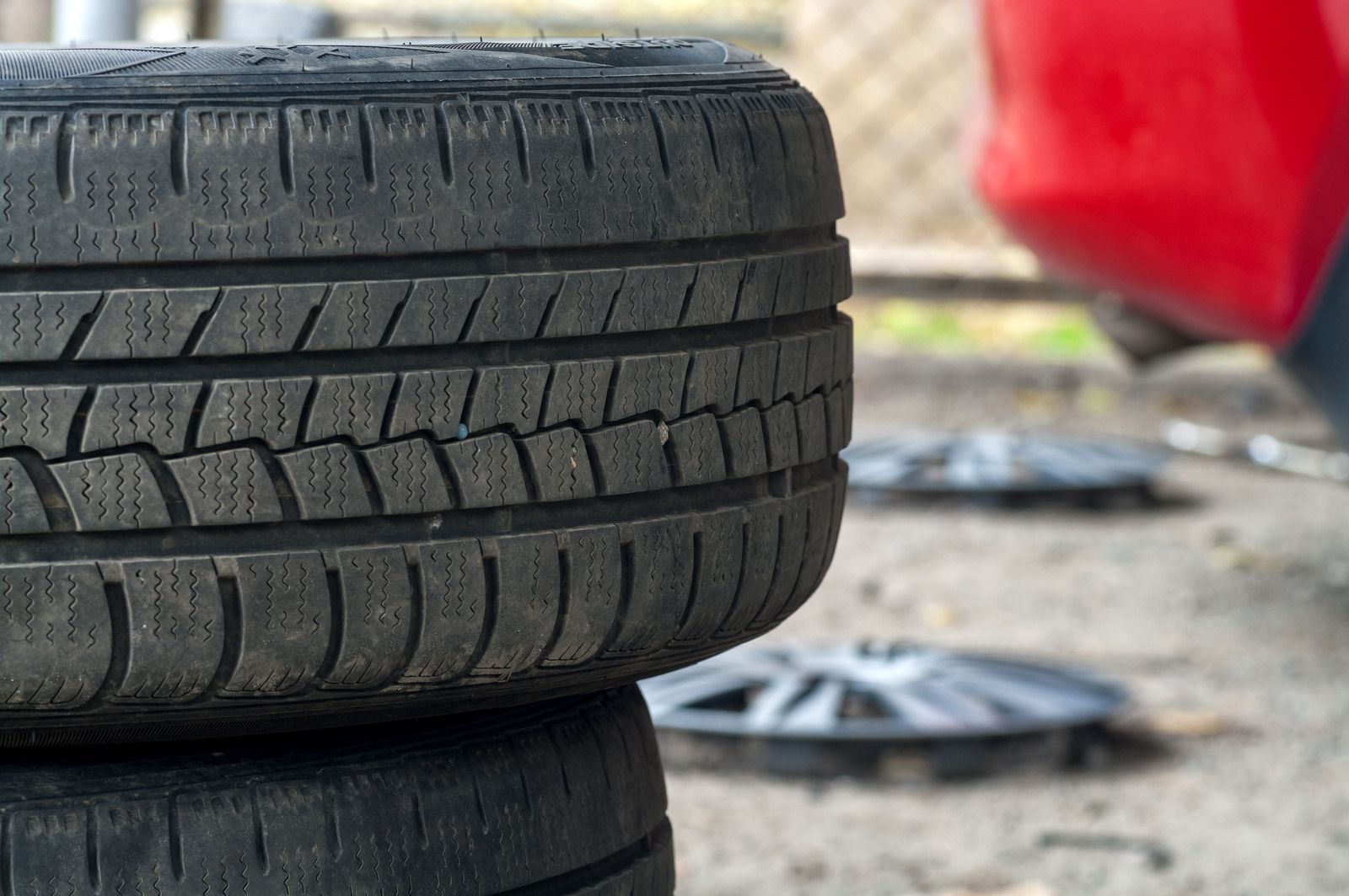
Most drivers assume that a tire with visible tread is a safe tire. That assumption costs people. Rubber degrades from the inside out, and a used tire with 6/32 of tread remaining can have micro-cracking in the sidewall or internal belt separation that no visual inspection catches without the right tools.
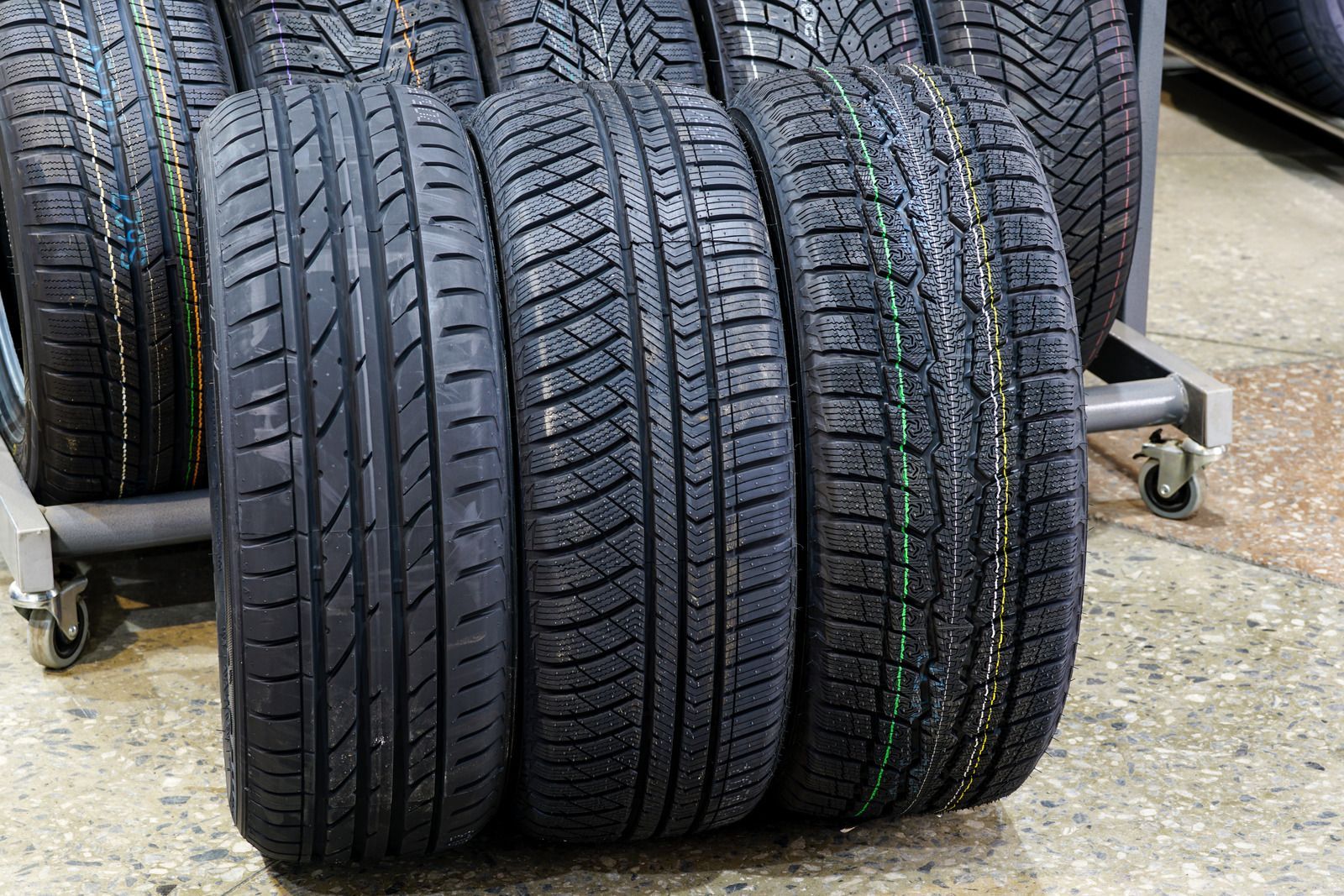
New tires ship from the manufacturer with 10/32 to 11/32 of tread depth. Missouri's wet spring season and winter ice put real demand on those extra millimeters. The legal minimum in Missouri is 2/32, but most tire professionals consider anything below 4/32 genuinely unsafe on wet pavement. On a used tire, you are starting somewhere in the middle of that range.
Age matters more than tread
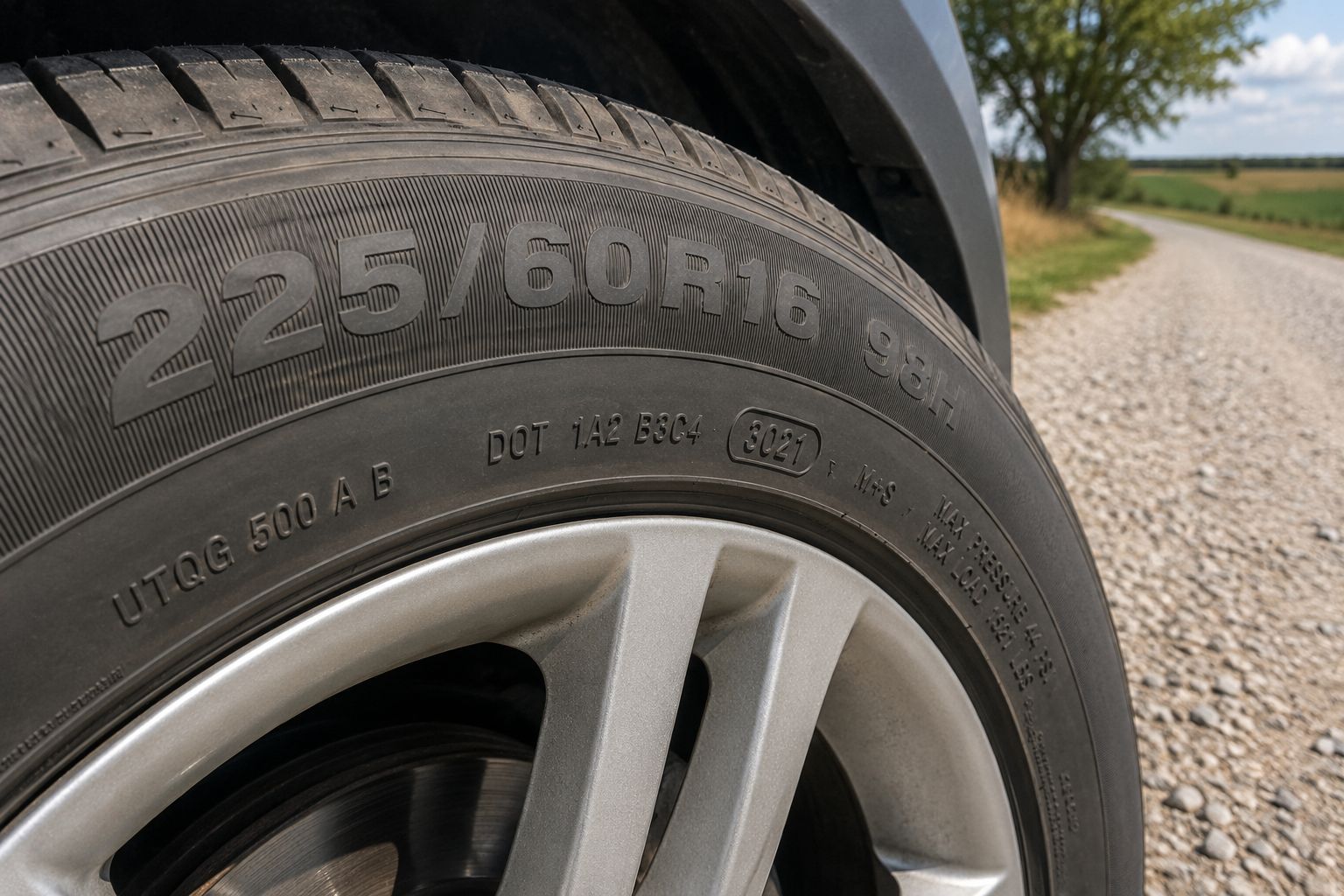
A tire's manufacturing date is molded into the sidewall as a four-digit DOT code. The first two digits represent the week, the last two represent the year. A tire made in week 24 of 2019 reads 2419. We see used tires come through that look fine on the surface but were manufactured 7 or 8 years ago. Most manufacturers recommend retiring a tire at 6 years regardless of tread, and hard stops at 10 years.
Internal damage is invisible
Curb impacts, pothole strikes, and overloading events can separate the belts inside a tire without producing any external symptom. That separation grows under highway speed and heat. A used tire has a history you cannot fully verify.
Prior repairs matter
A tire that was previously plugged through the sidewall should not be back in service. A plug in the tread area, done correctly, is a different matter. But a sidewall plug is a structural compromise that no amount of remaining tread makes acceptable.
TIP:
Ask to see the DOT code before you agree to any used tire. If the seller cannot show you the full four-digit date stamp, decline. A tire without a readable DOT code has no verifiable age, which means no way to assess its actual service life.
What to Inspect on a Used Tire
If you are considering used tires, the inspection process has to be thorough. Here is what we check before mounting anything that is not new stock.
Tread depth at multiple points
Measure with a gauge at three locations across the tread face. Uneven wear indicates an alignment or suspension issue on the previous vehicle. That wear pattern does not go away when the tire moves to yours.
Sidewall condition
Look for cracking, bulging, or any irregularity along the full circumference. Sidewall cracks, even fine ones, indicate UV and ozone degradation. A bulge means the internal structure has already separated.
Bead area
The bead is where the tire seats against the wheel. Damage here, from improper mounting or a hard curb strike, prevents a proper seal and will cause chronic air loss.
Previous repair locations
One centered tread repair done to industry standards is acceptable. Any sidewall repair is not. More than one tread repair on the same tire is a flag.
Uniformity
Spin the tire and watch for lateral wobble. Wobble means the carcass has shifted or the tire ran flat at some point, which permanently damages the internal structure.
WARNING: Never mount a tire that shows sidewall bulging, visible belt separation under the tread, or any evidence of having run flat. These are structural failures. A tire in this condition can experience a catastrophic blowout at highway speed with almost no warning.
New vs. Used: The Real Comparison
| Factor | New Tire | Used Tire |
|---|---|---|
| Tread depth | Full factory depth (10/32 to 11/32) | Partial, varies widely |
| Known age | Yes, from DOT code at purchase | Partially verifiable |
| Internal condition | Factory fresh | Unknown history |
| Repair history | None | May have prior repairs |
| Warranty | Manufacturer warranty applies | None |
| Lifespan from purchase | 40,000 to 70,000 miles depending on type | Remaining life unknown |
| Wet performance | Rated at full design spec | Compromised above 4/32 |
| Best scenario | Long-term vehicle, highway driving | Short-term vehicle, low mileage use |
Used tires make the most sense in a specific scenario: a vehicle you own short-term, driven primarily in town at lower speeds, where you need to get a few more months out of it without a large upfront spend. That is a real situation and used tires serve it. Where they become genuinely risky is on a primary vehicle driven on Missouri highways at speed, particularly in poor weather conditions.
How Missouri's Roads and Climate Factor In
Missouri sits in a weather transition zone that is genuinely hard on tires. Clinton and the surrounding Henry County area get real winter ice events, spring flooding conditions, and summer heat that pushes road surface temperatures well above ambient air temperature.
Asphalt surface temperature in a Missouri July can reach 140 to 160 degrees Fahrenheit on a sunny afternoon. That heat accelerates rubber oxidation, particularly in a tire that is already several years old. A used tire with age-related degradation will show that stress faster here than it would in a cooler climate.
Missouri also has a significant proportion of rural two-lane roads with uneven shoulders and gravel transitions. Those transitions create lateral forces on tire sidewalls that a degraded tire handles worse than a new one. We see sidewall failures on rural roads more often than on interstates, and used tires with existing sidewall stress are overrepresented in those calls.
Spring flooding leaves debris on roadways well after water recedes. Nails, glass, and metal fragments from flood deposits cause punctures at a higher rate in the weeks following a flood event. Starting with more tread depth gives you more margin before a puncture reaches the internal structure.
Our Experts Help Clinton Drivers Choose With Confidence
The decision between new and used tires comes down to one question: how much do you know about what that tire has been through? With new tires, the answer is everything. With used tires, the answer is always partial. That gap in knowledge carries real risk on Missouri roads, particularly through the winter ice season and spring flooding conditions that define driving in this part of the state.
At
McCullough Tire Co, we have been working with drivers across Clinton, Missouri, and the surrounding areas for 35 years. We carry new tire inventory and can help you evaluate whether a used option genuinely fits your situation or whether the risk outweighs the savings. Come in, and we will give you a straight answer.
Frequently Asked Questions
How do I read the age code on a tire sidewall?
Find the DOT stamp and read the last four digits. The first two are the manufacturing week, the last two are the year. Any tire over six years old needs careful inspection, and we advise against mounting anything beyond ten years regardless of tread appearance.
Can a used tire pass a safety inspection in Missouri?
Missouri inspections check tread depth, visible sidewall condition, and inflation. A used tire with adequate tread and no visible damage will pass. Inspections do not evaluate internal belt condition, age-related degradation, or prior repair quality. Passing inspection is a minimum standard, not a full safety guarantee.
Is it safe to mix new and used tires on the same vehicle?
Mixing requires care. Tires on the same axle must match in size and stay as close as possible in tread depth. A large depth difference between axles affects handling during emergency stops and wet conditions. We recommend matching tires by axle at minimum before considering any mixed setup.
What is the difference between a plug repair and a patch repair?
A plug fills a puncture from the outside without dismounting the tire. A patch is applied from inside after a full inspection. The correct repair combines both from the inside. Plugs alone are temporary. Any used tire showing only an external plug gets dismounted and inspected before we remount it.
How does Missouri's winter weather affect tire choice?
Ice and sleet in Henry County arrive fast, and coat roads before treatment crews respond. A used tire at 4/32 tread or less shows significantly longer stopping distances on wet and icy surfaces. Heading into a Missouri winter on a primary vehicle, that tread margin matters more than upfront savings.